


Published June 12th 2025
Swiss Deflation; What’s Next
As global uncertainty intensifies, Switzerland finds itself navigating a delicate economic landscape. The country is poised to become a rare example of proactive monetary easing in a world where central banks are cautiously re-evaluating their policy paths. The Swiss National Bank (SNB) appears ready to cut its policy rate to 0%, acknowledging a softening inflation outlook and a strengthening CHF that is beginning to weigh on competitiveness.
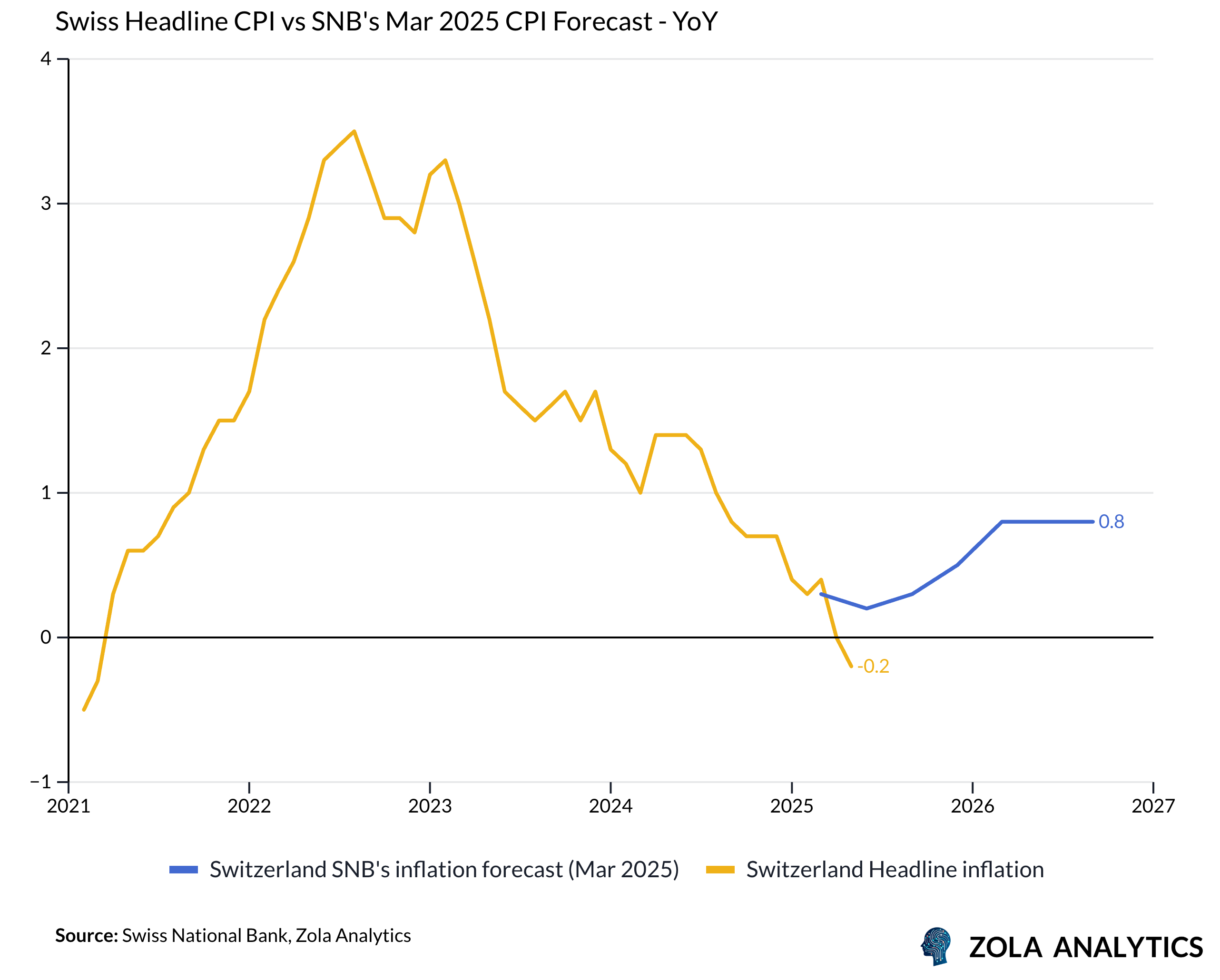
Recent inflation data underscore the challenge. The Swiss Consumer Price Index fell back into deflation in May, registering -0.1% year-on-year, while core inflation declined to just 0.5%. Strikingly, all major components of inflation have slowed dramatically over the past two years. Even domestic inflation—excluding rents—has now turned negative. This broad-based disinflation suggests that weakening demand and currency strength are combining to exert persistent downward pressure on prices.
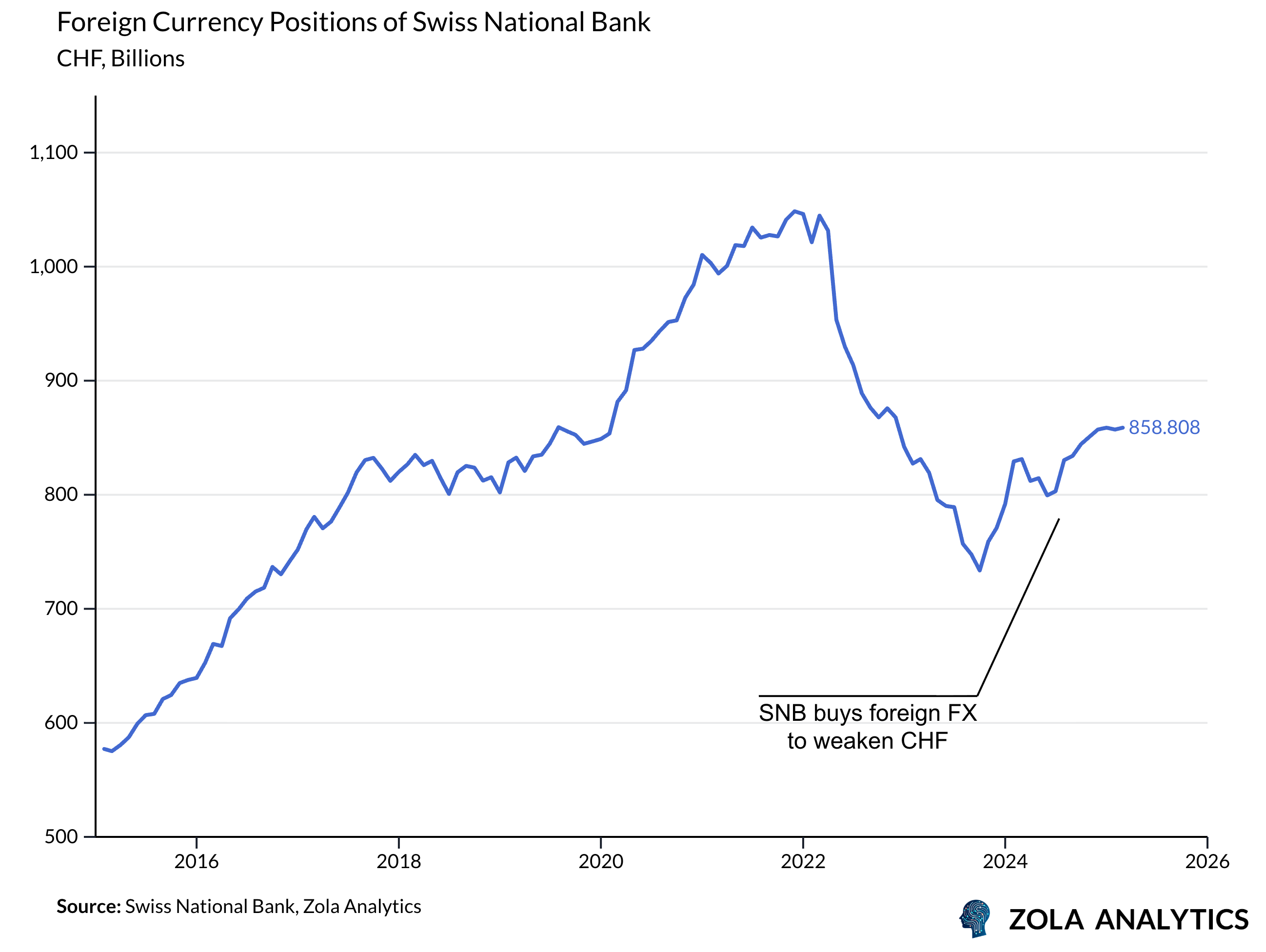
The strong CHF, often viewed as a haven in times of market stress, has appreciated significantly since the onset of new trade tensions emanating from the United States. In response, Swiss authorities have discreetly intervened in foreign exchange markets, purchasing foreign currencies to temper the CHF’s rise. These actions, unseen for over three years, highlight the mounting pressure on policymakers to shield the economy from external shocks.
Markets are taking notice. Expectations have shifted notably, with investors now pricing in a policy rate of -0.25% by year-end—an indication that confidence in the SNB’s commitment to curbing currency strength and supporting domestic inflation is firming. A return to negative rates, once thought part of the past, may soon re-enter the toolkit.
While first-quarter GDP growth offered a temporary boost, largely driven by pre-tariff export activity to the US, forward-looking indicators such as manufacturing PMIs paint a less optimistic picture. The global backdrop—riddled with trade disputes and slowing demand—means that domestic resilience could be tested in the months ahead.
Switzerland’s strategy reflects a broader trend: in a world of diminishing policy ammunition, central banks are becoming increasingly tactical. For the SNB, the interplay of inflation dynamics, exchange rate pressures, and global economic developments will define the next chapter of its policy narrative.