


Published 17th October 2025
8 minute read
The Mechanics of Prosperity
Two hundred and fifty years ago, the rhythm of life for the average person had altered little since the dawn of agriculture. Days were spent tending soil, weaving cloth, and hoping the harvest would last the winter. Then something extraordinary happened. Within a few generations the lamp was replaced by the lightbulb, the horse by the engine, alchemy by chemistry.
Today, economic growth seems like a state of nature; stagnation, a failure for which governments must answer. Yet in the sweep of history, it is growth itself that demands explanation. This year’s Nobel Prize in Economics was awarded for an answer for the most fundamental question of economic history: ‘How did we get rich?’
In this week’s edition of the Zola Chartbook, we examine how the work of Joel Mokyr, Philippe Aghion, and Peter Howitt illuminates that transformation, and what their insights mean for today’s markets.
The Origins of Progress
For most of recorded history, economies advanced in bursts and then stalled. Roman aqueducts, gothic cathedrals and Chinese canals are testament to the technical skill of their builders. Yet artisanal knowledge travelled by craft and memory, rather than codification and publication, so skill rarely translated into sustained growth.
From the late seventeenth century, a new European culture of open inquiry began to connect scholars, inventors, and artisans. The spread of printing, correspondence, and learned societies created what Mokyr called the Republic of Letters, an open market for ideas in which evidence could be challenged and results reproduced. That intellectual infrastructure laid the ground for the most profound shift of the modern era: the durable accumulation of knowledge.
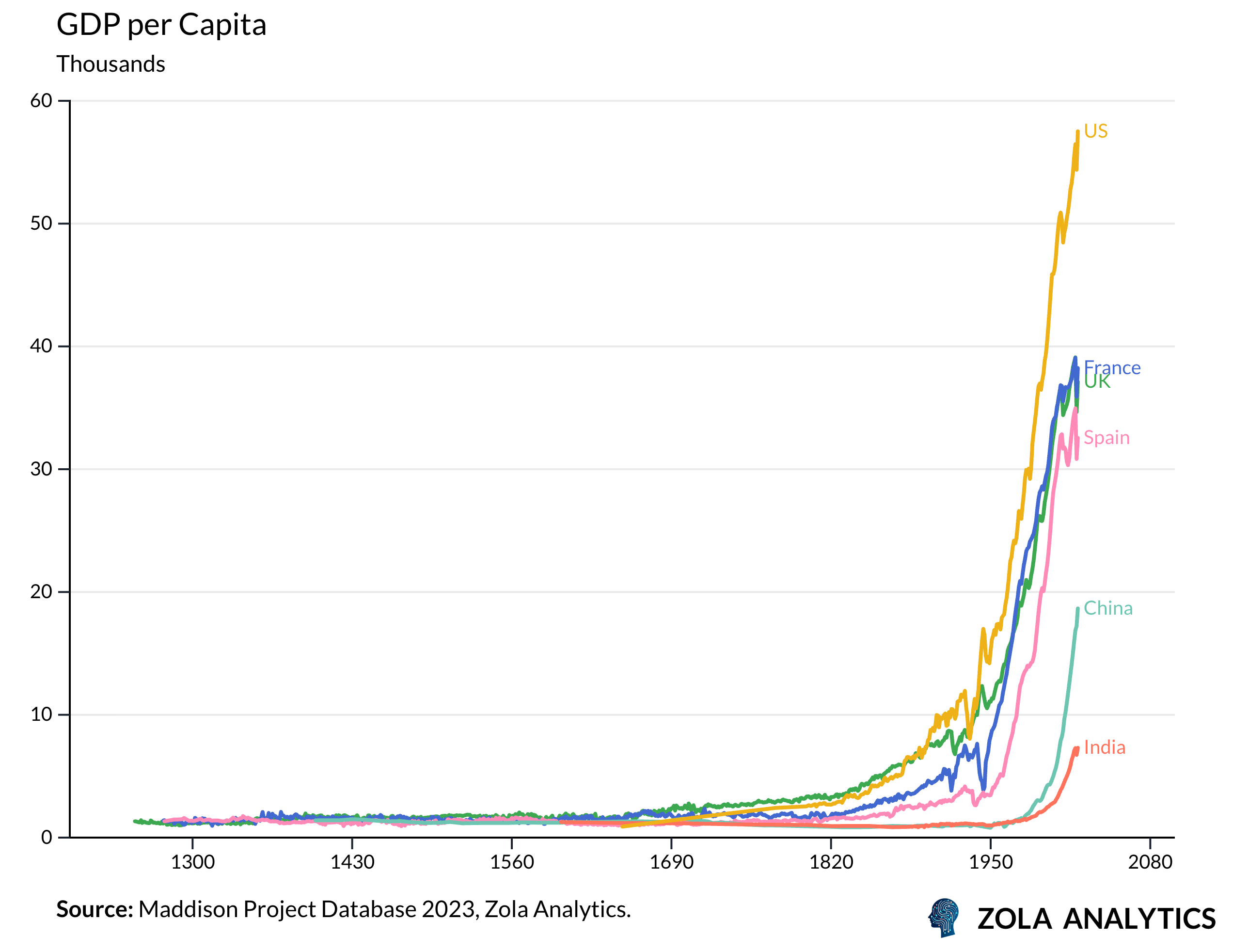
Mokyr sought to explain why the great acceleration began in eighteenth-century Britain rather than in older and wealthier empires. Other civilisations had science and craft, but rarely the institutions that made them reinforce one another. His answer lay in the emergence of what he called the supply of useful knowledge: a growing stock of ideas that were codified, verifiable, and accessible to those who could turn them into tools.
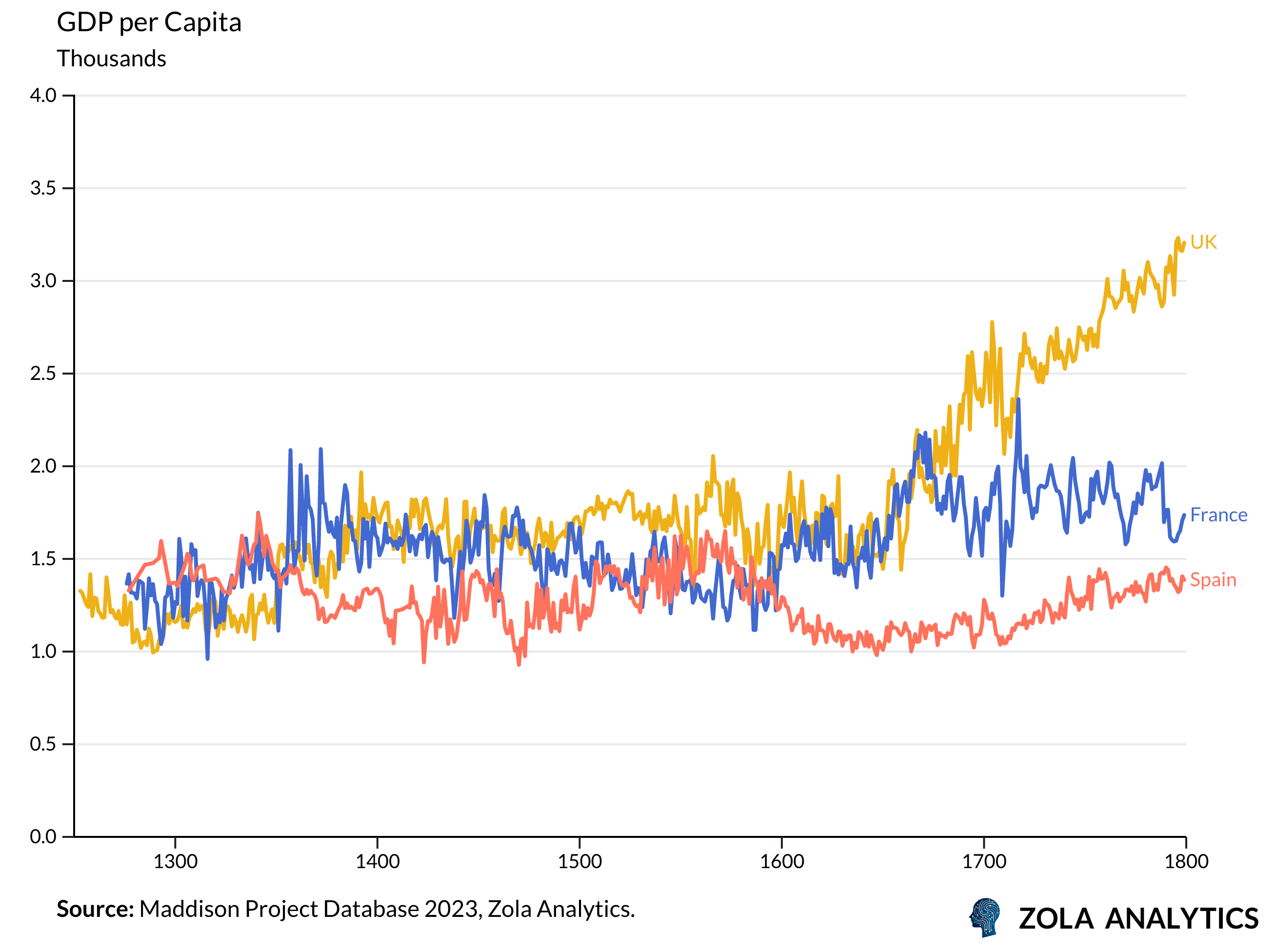
The Enlightenment’s culture of publication and debate connected explanation to application, so that inquiry began to yield productivity, not just understanding. Propositional knowledge, the laws that describe how the world works, began to interact continuously with prescriptive knowledge, the know-how of engineers and artisans. That interaction rested on three revolutions: in thought, in skill and in freedom. Science became a self-governing enterprise grounded in evidence and replication; a new technical class of engineers and entrepreneurs translated theory into machines; and a more open social order allowed experiment to proceed without fear of heresy or ruin.
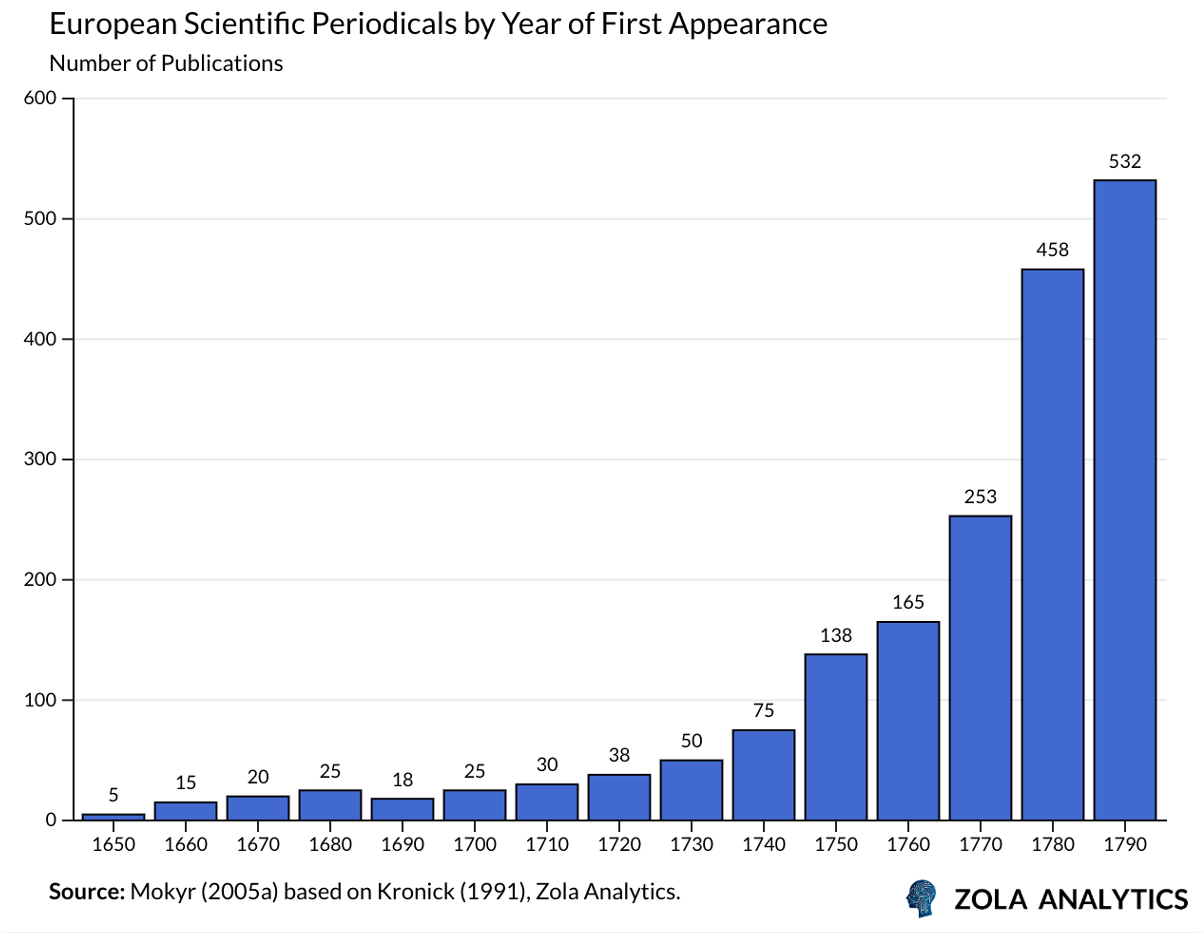
Out of that synthesis arose a self-correcting cycle: science generating tools, tools revealing new facts, each reinforcing the other. Knowledge became cumulative; for the first time, progress could be relied upon to continue.
The Logic of Renewal
If Mokyr explained how growth began, Philippe Aghion and Peter Howitt explained how it endures. Building on Joseph Schumpeter’s idea of creative destruction, they showed that innovation is not an accident but a system in which economies expand when new firms and technologies continually displace the old. Growth, in their model, is endogenous, driven by the search for better ideas.
Modern economies appear stable. Output rises, productivity increases, living standards climb. Yet beneath that calm surface lies relentless motion. Each year roughly one in ten firms in advanced economies closes while a similar number is newly created. The apparent steadiness of growth hides constant churn as advances in one sector offset obsolescence in another. This constant renewal gives capitalism its rhythm of destruction and creation.
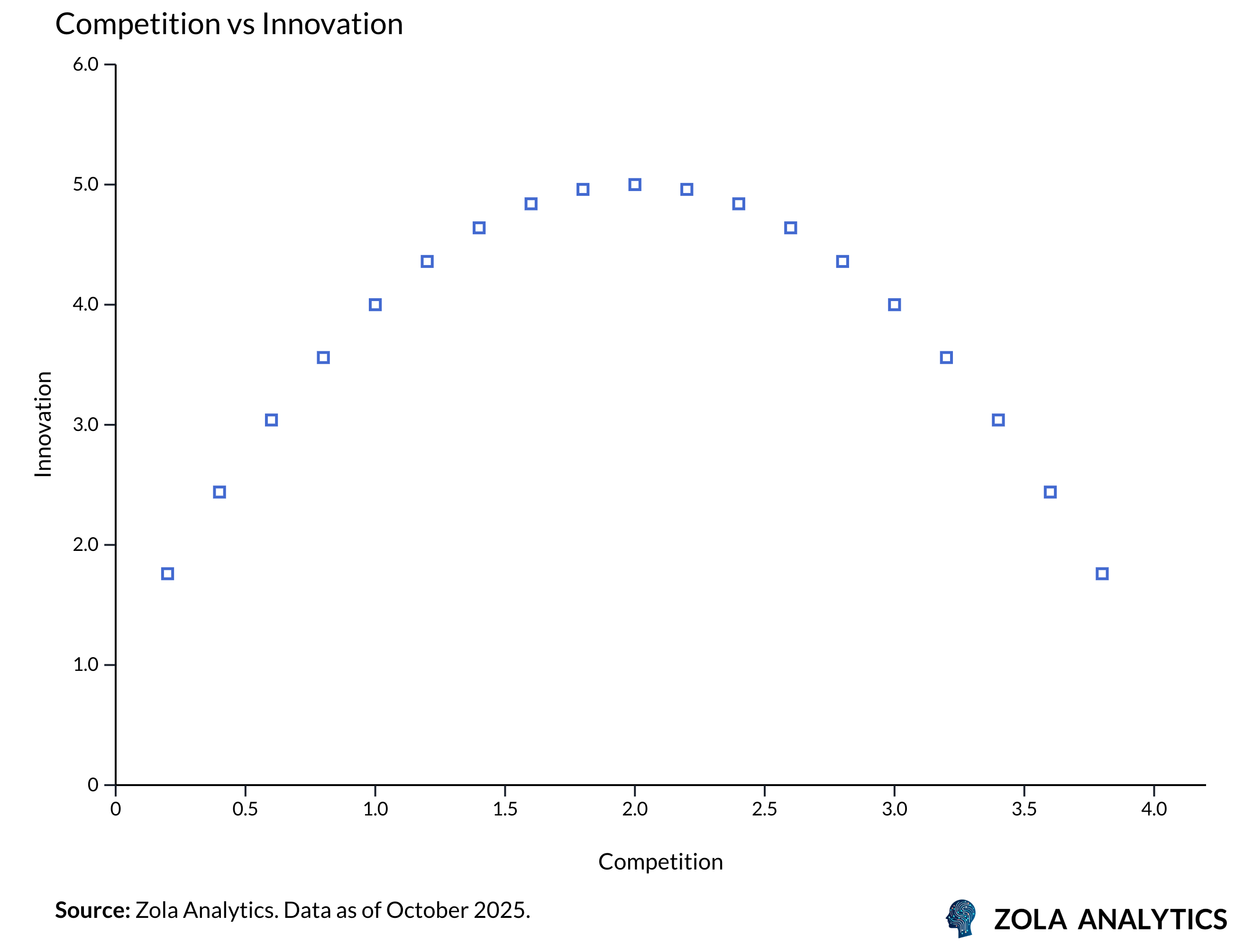
Aghion and Howitt formalised Schumpeter’s intuition. They showed how the disorder of innovation could yield order in the aggregate. Growth arises not from coordination but from decentralised competition to discover and replace. Each innovation pushes the frontier forward while eroding the rents that sustained its predecessors. The process works only when discovery is rewarded yet imitation remains possible. If competition is too weak, incumbents defend their positions and innovation slows. If it is too intense, potential innovators cannot recover their costs. The relationship forms what economists call the inverted-U of innovation: as competition rises from low levels, creativity accelerates, but beyond a point the rewards to discovery collapse and effort subsides.
The Aghion–Howitt framework became the foundation for modern theories of innovation-driven growth. It provided economists with a workhorse model for understanding how ideas, competition and policy interact to shape long-term prosperity.
The Great Slowdown
Since the 1970s, productivity growth in advanced economies has weakened. The work of Mokyr, Aghion and Howitt helps clarify why. It highlights a fracture in the link between invention and prosperity, between the creation of ideas and their diffusion through the economy.
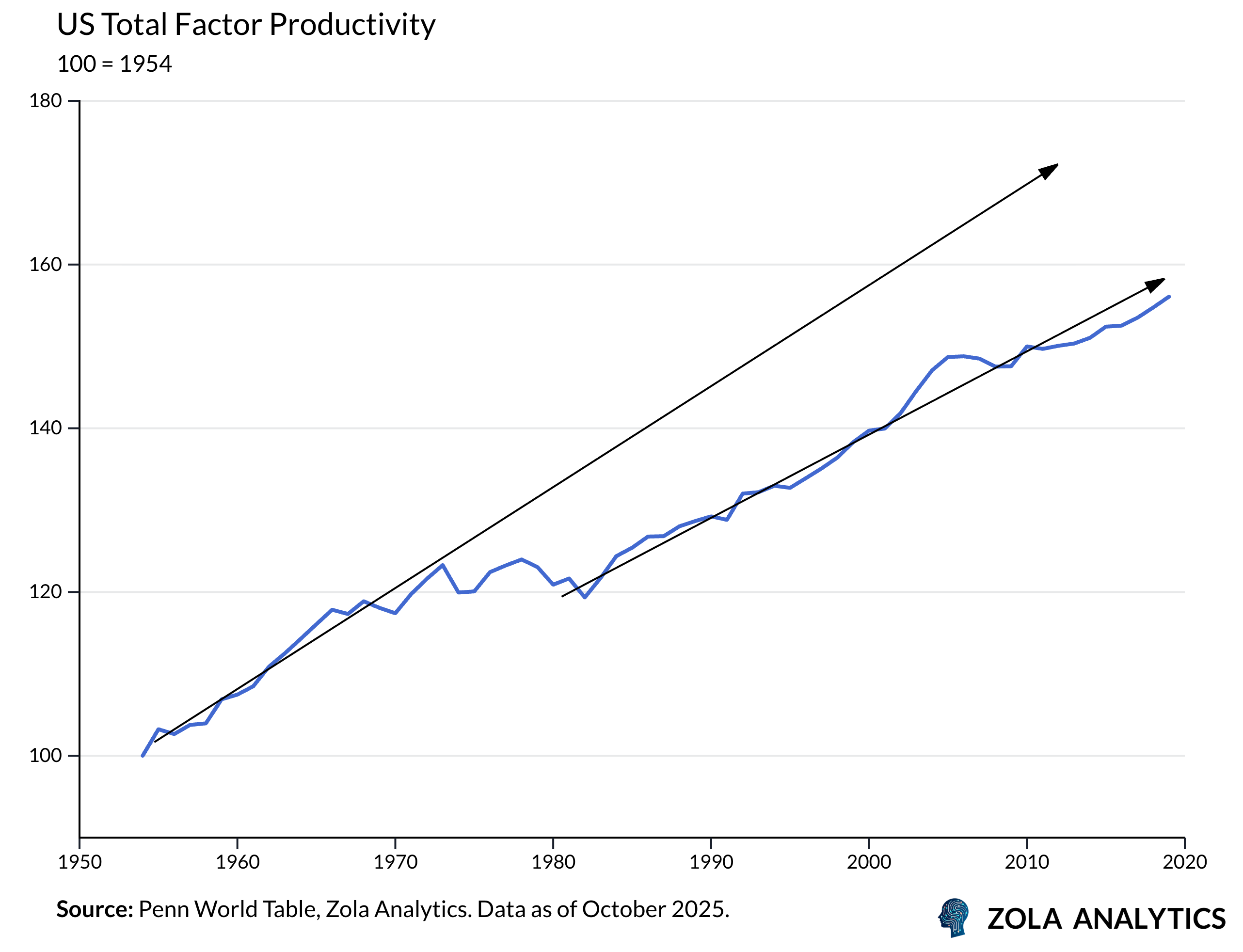
Across industries, business dynamism has fallen sharply: in the United States, firm entry rates have halved since the early 1980s, and the share of employment in young firms has dropped by two-thirds. Market concentration and profit margins have grown. As dominant firms extended their reach, the threat from challengers faded, and the process of renewal slowed.
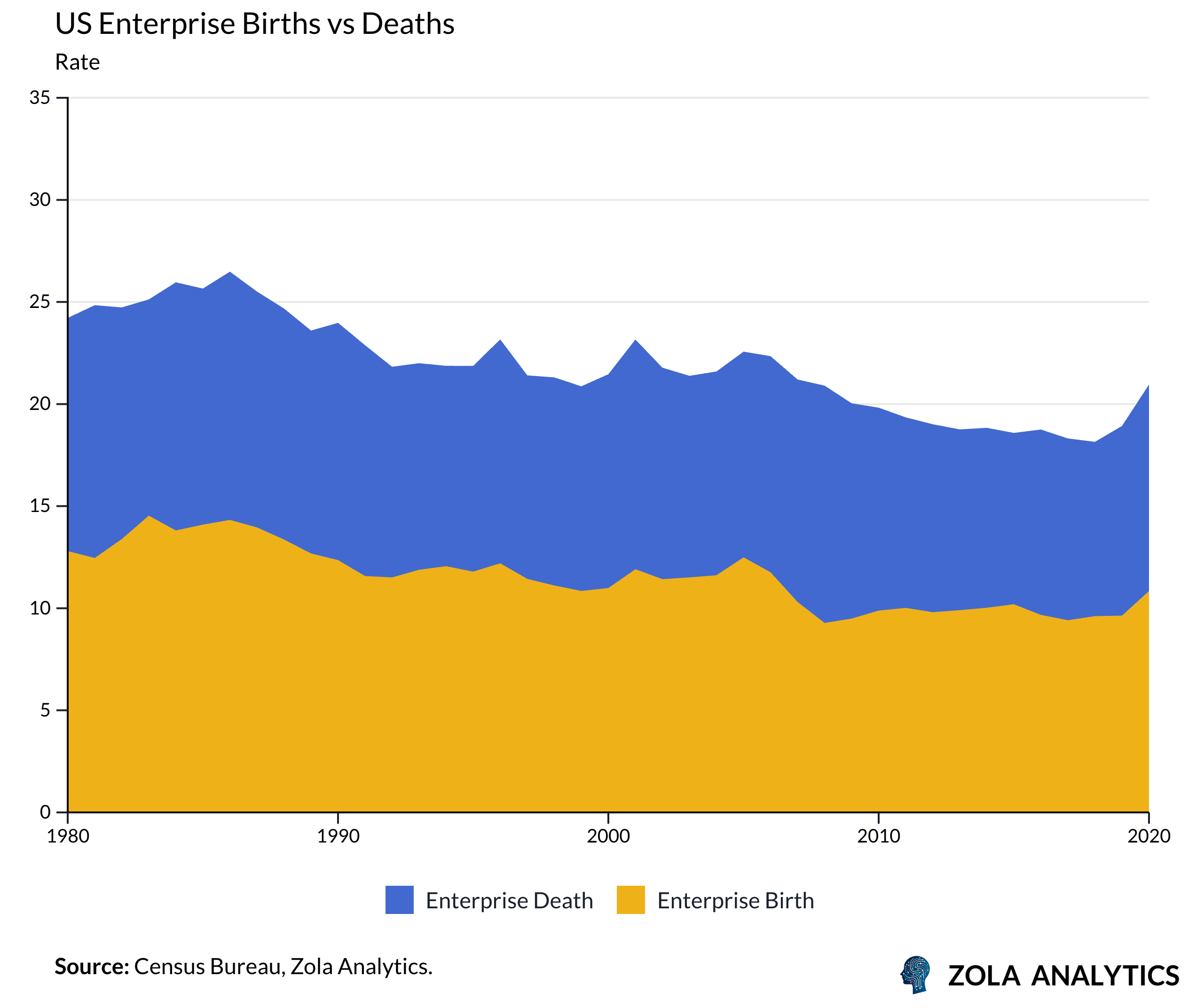
Aghion and Howitt’s insight is that growth depends on continual replacement. When competition falters, the mechanism of creative destruction weakens and progress stalls. Mokyr reminds us that discovery only transforms economies when knowledge circulates widely. Today, both channels have narrowed. R&D has become concentrated in a few firms, the gap between frontier and laggard companies has widened, and adoption of new technologies often lags by a decade or more. The result is not a shortage of invention but a failure of transmission.
The Next Frontier
Artificial intelligence may prove the most consequential general-purpose technology since the steam engine. Like earlier breakthroughs, it can displace labour or expand the growth of knowledge itself. As Aghion’s recent work shows, these paths lead to different outcomes. If AI remains confined to replacing labour within existing industries, productivity will rise only to level off as the remaining unautomated sectors limit overall growth. But if AI begins to improve the process of idea creation itself, by helping researchers to generate, test, and combine knowledge, it can sustain progress rather than exhaust it.
This distinction returns us to the central insight of the laureates. Innovation delivers prosperity only when new ideas are applied widely and when institutions permit adaptation as fast as discovery. Britain’s industrial transformation succeeded not just because it invented new machines but because it built the habits, laws, and skills to use them. The same will decide how AI reshapes growth today.
What matters now is whether societies have the capacity to adapt to rapid change. That means education that cultivates reasoning, competition that keeps opportunity open, and governance that earns public trust in periods of disruption. Aghion, Howitt, and Mokyr remind us that progress endures when knowledge moves freely and when people believe that its rewards will be shared. If those conditions hold, the next wave of innovation will deepen prosperity rather than divide it.
Sign up to receive the Zola Global Macro Chartbook every week: https://www.zolaanalytics.com/insights?signUp